



taylapack2310
taylapack2310
Commercial Residential Or Commercial Property – The Brazoria County Appraisal District
Which Properties are Classified in Category F1, Real Residential Or Commercial Property – Commercial?
Category F1 residential or commercial property includes land and enhancements associated with services that sell items or services to the public. Some examples of business companies are: wholesale and retailers, shopping mall, office structures, restaurants, hotels and motels, filling station, parking lot and lots, automobile dealerships, repair stores, financing companies, insurance provider, cost savings and loan associations, banks, credit unions, centers, nursing homes, medical facilities, marinas, bowling streets, golf courses and mobile home parks.
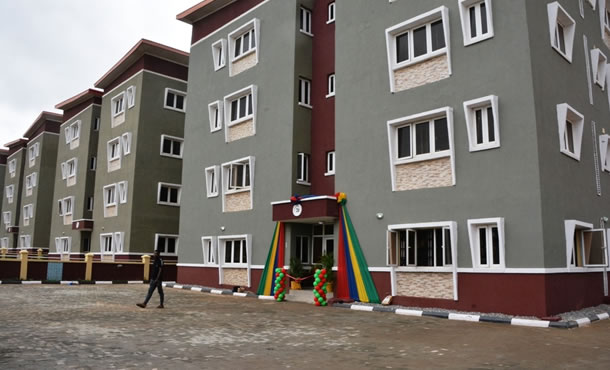
Warehouses provide a special classification challenge since of the problem some appraisers have experienced in comparing business real residential or commercial property (Category F1) and commercial real residential or commercial property (Category F2). The main consideration is whether the storage facility is used as a part of the production procedure.
Warehouses that get items from more than one producer or supplier to offer wholesale or retail should be categorized as Category F1, business real residential or commercial property The individual residential or commercial property ought to be classified as Category L1, industrial individual residential or commercial property.
Examples of storage facilities that need to be classified as Category F1, commercial real residential or commercial property, consist of:
– A warehouse that buys finished clothing from a number of makers and offers it to wholesale or retail outlets.
– A warehouse that runs primarily as a retail outlet.
Warehouses that provide storage as part of a production process should be categorized as industrial genuine residential or commercial property (Category F2). Industrial storage facilities are normally owned by the manufacturer and are normally on or near the site of the factory.
Examples of warehouses that need to be categorized as Category F2, industrial real residential or commercial property, include:

– A storage facility that stores numerous kinds of cloth, materials and materials utilized by a manufacturing plant to produce clothes. The warehouse including these products makes sure the efficient operations of the production company by providing a continuous supply of important resources.
– A warehouse that only operates to receive the completed clothes from a production plant as it is made, and after that disperses it to wholesale or retail outlets. This storage facility allows the factory to preserve a regular and effective production schedule by producing clothes even when there is no instant buyer.
It can not be overemphasized that personal residential or commercial property connected with either industrial real or business genuine residential or commercial properties ought to not be categorized as either Category F1 or Category F2, but need to rather be classified as either Category L1 (commercial individual residential or commercial property) or Category L2 (industrial and production personal residential or commercial property).
Important Notes in Classifying Commercial Real Residential Or Commercial Property
– Include both the land and improvement value. The land may be evaluated by the CAD and the improvement by an appraisal firm. The overall land and enhancement worth, nevertheless, is classified as F1 residential or commercial property.
– Do not include commercial personal residential or commercial property as Category F1 residential or commercial property.
Category F1 Classification Questions
Q. An advancement business owns a 360-unit time-share condo complex. How should this residential or commercial property be classified?
A. This residential or commercial property is run as a commercial company. The genuine residential or commercial property value is categorized as Category F1 residential or commercial property. The individual residential or commercial property needs to be categorized as Category L1.

Q. One of our people owns a company and a surrounding lot. Both the company and lot are used for industrial functions. Should the appraisal district categorize the adjacent lot as an uninhabited lot under Category C or as business genuine residential or commercial property under Category F1?
A. The classification of any residential or commercial property depends upon its use. Since the nearby lot is used in conjunction with an industrial organization, it must be classified as Category F1.
Q. A telephone store is owned and run as an independent operation by AT&T. The shop sells and repair work telephones. How is this residential or commercial property classified?
A. Despite the fact that an energy business owns this store, it is operated as a commercial company and is not a necessary element of energy operations. Classify the residential or commercial property as Category F1 residential or commercial property.
Q. If a motel suite establishment, such as a motor inn, rents by the month, is it categorized as Category B residential or commercial property or F1 residential or commercial property?
A. The motor inn leases the systems on a short-term basis. The residential or commercial property is classified as Category F1 residential or commercial property.
Q. A warehouse store chain purchases merchandise from a number of manufacturers for circulation to their business shops. Should their storage facility be classified as Category F1 residential or commercial property?
A. Yes. The warehouse is not part of the manufacturing process When residential or commercial property is utilized for keeping product bought from more than one manufacturer, which will be dispersed to retail outlets, it needs to be considered business residential or commercial property.

Information taken, in part, from the 2013 Residential or commercial property Classification Guide published by the Residential or commercial property Tax Assistance Division (PTAD) of the Texas Comptroller of Public Accounts.
Overview of Commercial Approaches to Establishing Residential Or Commercial Property Value

Sales Comparison Approach
– Analyze sales of similar residential or commercial properties compared to subject residential or commercial property.
– Sales information: Sale surveys, Marketing research business, 3rd party appraisals, Local media, Appraisal Review Board process.
– Comparables adjusted for sale conditions, land size, improvement size, age, condition, and area
– Arrive at indicated Sales Approach to Value
The sales contrast approach is utilized at residential or commercial property tax hearings for houses, land and owner-occupied buildings. It is often utilized for income residential or commercial properties as a secondary method of valuation. To perform the sales contrast method you require details on other sales of residential or commercial property similar to your residential or commercial property. You can get this information from a variety of sources consisting of the appraisal district’s realty appraisers, brokers and third party suppliers. Inspect and photograph the comparable sales making comprehensive notes regarding distinctions in between the equivalent sales and your residential or commercial property. Then make changes for distinctions in between the subject residential or commercial property and comparables. Adjust comparable sales to the subject residential or commercial property. Select sales as similar as possible to the subject residential or commercial property to reduce changes.
Income Approach
– Capitalization of Income
– Direct Capitalization
– Single year’s net operating divided by market cap rate
– Market income data compared to subject residential or commercial property income data
– BCAD gathers and goes into earnings data into database: Income and expense information, Rental data, Occupancy information, Secondary earnings information, Net operating Income data
– Capitalization rates estimated based on price and net operating earnings
– Outside sources: Marketing research business, Real estate publication
– Capitalization rates used for IMA Income Models
residential or commercial property earnings parts compared to market indications
– Income Approach preferred approach for earnings producing residential or commercial property (Office, Apartment, Retail, Industrial)
The income method is usually utilized for earnings residential or commercial properties. The fundamental theory is that investors purchase earnings residential or commercial properties for the income stream they produce. This income stream can be transformed to an indication of market value for the residential or commercial property. The primary actions in the income technique are to estimate the prospective gross earnings utilizing rent comparables and info relating to actual earnings at the subject residential or commercial property. An allowance for job is estimated based on the performance of the subject residential or commercial property and typical job in the location. Business expenses are approximated utilizing actual costs at the subject residential or commercial property and market costs for comparable residential or commercial properties. The net operating earnings is calculated by deducting vacancy and operating expenses from the prospective gross earnings. Net operating income is transformed to an indication of market worth by dividing it by the capitalization rate.
Cost Approach
– Calculates Replacement Cost New (RCN).
– Deducts Depreciation (LD).
– Uses Age-Life Tables.
– National Cost Publication Service.
– Market Data.
– Cost tables produce cost per square foot.
– Land worth contributed to improvement worth( RCNLD).
– Preferred approach for special use residential or commercial properties, new building, limited sales data, or minimal income data
The expense approach is not generally utilized at the ARB hearings except for brand-new buildings. Appraisal districts often utilize the expense approach for residential or commercial properties up to two or 3 years of ages. After that, the sales comparison approach or income technique depending upon the type of residential or commercial property is used. The appraisal district will apply the expense approach for a new residential or commercial property by including the marketplace worth of the land (generally the purchase cost) to the building and construction costs for the building. In addition, they may add an allowance for soft costs and for entrepreneurial revenue.