

Key Points:
- Families must understand the different types of HCBS services and eligibility requirements to access support effectively.
- Application processes can be complex, but proper documentation, assessments, and advocacy make a difference.
- Local availability, waitlists, and state-specific rules all impact access to HCBS programs and services.
For many families, securing support for a loved one with a disability or chronic condition feels overwhelming. The promise of Home and Community-Based Services (HCBS) brings hope—but navigating HCBS eligibility and access can be a maze of paperwork, confusing terms, and long wait times. If you’re searching for guidance on how to qualify for and access these essential services, you’re not alone.
This guide is designed to help you understand what HCBS entails, how to determine if your family qualifies, and how to effectively move through the system—step by step.
What Are Home and Community-Based Services (HCBS)?
HCBS is a Medicaid program designed to provide long-term care services in home and community settings instead of institutional environments. These services support individuals with disabilities, developmental delays, mental health conditions, and aging-related needs.
Common HCBS services include:
- Personal care assistance
- Respite care
- Behavior support
- Transportation
- Home modifications
- Day habilitation
- Supported employment services
Each state runs its own HCBS waivers, meaning the exact offerings and rules may differ based on where you live.
Who Is Eligible for HCBS?
Eligibility depends on a combination of medical and financial criteria. Generally, to qualify for HCBS, an individual must:
- Meet Medicaid financial requirements – HCBS is administered through Medicaid, so income and asset thresholds apply. Some states use Medicaid waivers to expand who qualifies.
- Demonstrate a need for institutional-level care – Even though HCBS services are delivered in the home or community, applicants must meet the same level of care requirements that would qualify them for a nursing facility, ICF/IID, or other institution.
- Be part of a target population – Waiver programs often serve specific groups—such as children with autism, adults with developmental disabilities, or seniors needing daily support.
Each HCBS waiver outlines its own eligibility guidelines, and many include age, diagnosis, or disability-specific criteria.

The Application Process for HCBS Services
Applying for HCBS can feel like stepping into a bureaucratic jungle. Here’s how to start, along with tips for avoiding common pitfalls:
Contact Your Local Medicaid Office or Developmental Disabilities Agency
This is the gateway to understanding what HCBS waivers exist in your state and how to apply. Ask for case management or service coordination to assist you.
Submit a Preliminary Intake or Screening Form
Most states require an initial intake to determine whether a full application is warranted. This may be a phone interview or written form that screens for basic eligibility.
Undergo Functional and Financial Assessments
You’ll typically need to provide:
- Medical records
- Physician evaluations
- Proof of income/assets
- Social Security or disability documentation
An assessor may visit your home to evaluate daily living needs and care requirements.
Wait for Approval or Waitlist Notification
Some waiver programs have long waiting lists, especially for high-demand services like autism-related supports or respite care. Even if approved, you may need to wait before services begin.
Challenges Families Face in Accessing HCBS
Navigating HCBS eligibility and access often comes with stress and confusion. Here are the most common barriers—and what you can do:
Complex Eligibility Rules
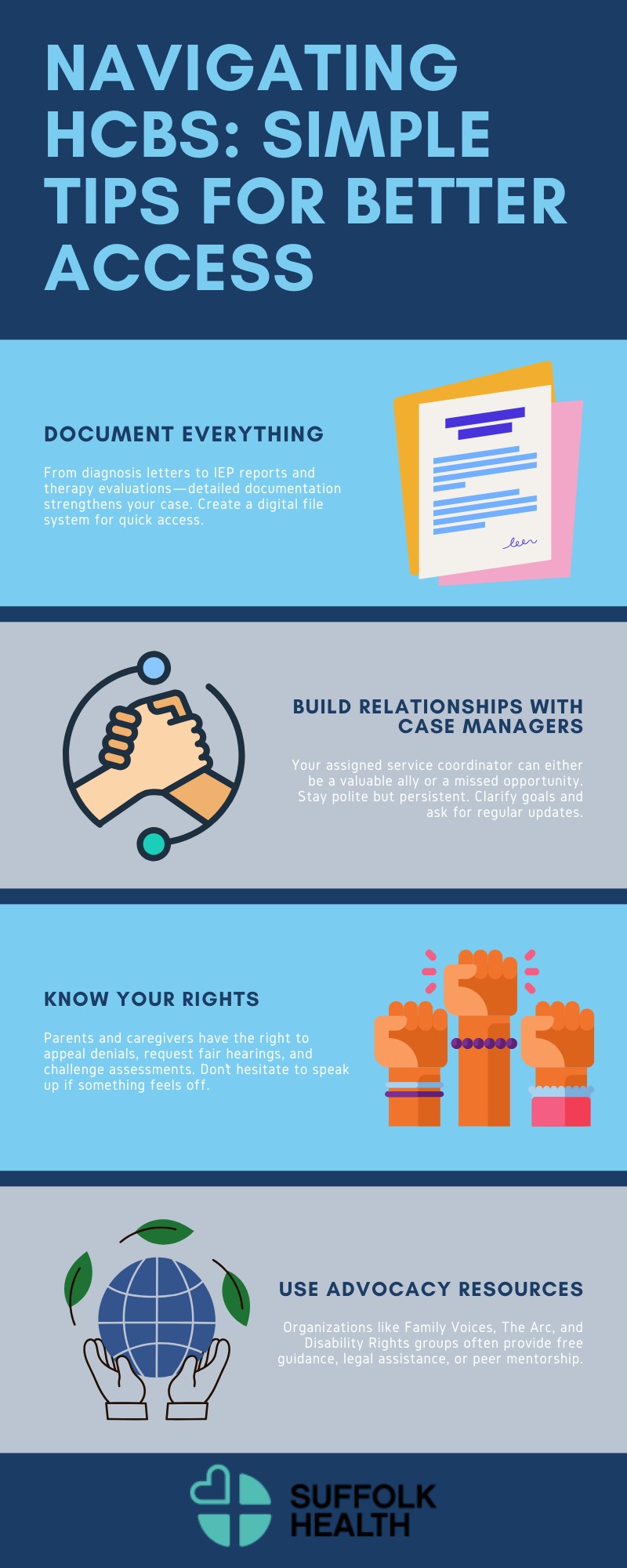
Eligibility criteria can differ not only by state but also by waiver type. This is especially frustrating for families moving from one state to another. Tip: Keep copies of all medical, developmental, and financial documents. Having them on hand makes transitions and reevaluations smoother.
Long Waitlists
Waiver programs are capped, and spots are limited. Some families wait months or even years. Tip: Join the waitlist anyway while exploring other interim services like private therapy, community support groups, or early intervention programs.
Lack of Clear Communication
It’s common for families to feel like they’re getting vague or conflicting answers. Tip: Ask for everything in writing, and follow up frequently. Consider reaching out to advocacy organizations for help if you’re getting stalled.
Regional Disparities
Availability of HCBS providers varies widely—even within the same state. Rural areas often have fewer qualified providers. Tip: Use online directories and community networks to locate nearby services. Telehealth options are growing for some HCBS supports.
Tips for Successfully Navigating the HCBS System
To boost your chances of qualifying and getting the help your family needs, consider the following strategies:
What to Expect After Approval
Once approved for HCBS services:
- You’ll participate in a person-centered planning meeting to design a care plan.
- A budget will be assigned based on need and available funding.
- You may choose a provider agency or, in some states, self-direct services (where you hire your own caregivers).
Prepared for periodic reassessments to maintain eligibility and funding levels.
HCBS Programs Evolve
State Medicaid waivers and HCBS structures are always subject to change—whether due to legislation, funding shifts, or state-level policy updates.
Staying informed ensures that your loved one receives the maximum level of support possible. Subscribe to updates from your state’s Medicaid or developmental disability agency and maintain open communication with your care team.
Promote Independence with ABA Therapy
While HCBS services cover a wide range of support systems, Applied Behavior Analysis (ABA) therapy remains a vital part of care for many individuals—especially children with autism. ABA focuses on improving functional skills, reducing problem behaviors, and fostering independence across home and community environments.
Incorporating ABA therapy into your HCBS plan, you can enhance quality of life and promote long-term success for your loved one.
Start Accessing Support with Suffolk Health Today
If you’re feeling stuck navigating HCBS eligibility and access, Suffolk Health can help. Our team provides comprehensive HCBS services in Long Island, New York, helping families like yours understand the system, access the right supports, and receive person-centered care in the home and community.
Whether you’re starting an application or are already on a waiver, we’re here to walk beside you every step of the way. Contact Suffolk Health today to explore how our HCBS programs can make life more manageable for your family—right where you live.
