Daily Archives
May 27, 2025





Key Points:
- Primary care plays a central role in early detection, routine monitoring, and personalized management of chronic diseases.
- Building a long-term relationship with a primary care provider improves treatment adherence and outcomes.
- Coordinated care, preventive strategies, and patient education provided by primary care practices reduce complications and hospitalizations.
Receiving a diagnosis of a chronic condition—whether it’s diabetes, hypertension, asthma, or heart disease—often leads to the first question: “What now?” That question comes with stress, uncertainty, and often, confusion about how to manage the condition effectively over time. Chronic illnesses don’t simply go away. They require ongoing care, consistency, and careful monitoring—and that’s where primary care becomes essential.
While specialists have their place, it’s the ongoing partnership with a primary care provider that forms the foundation of effective chronic disease management. Let’s explore how this approach helps patients live healthier, more stable lives.
What is Chronic Disease Management?
Chronic disease management refers to the care and coordination of services needed to help individuals manage long-term health conditions. These include illnesses such as:
- Type 1 and Type 2 diabetes
- Hypertension (high blood pressure)
- Chronic obstructive pulmonary disease (COPD)
- Asthma
- Cardiovascular diseases
- Arthritis
- Chronic kidney disease
- Obesity
Unlike acute conditions that can be resolved quickly, chronic diseases persist and evolve, requiring continuous evaluation, education, medication adjustments, and lifestyle changes. Primary care providers (PCPs) are ideally positioned to deliver this kind of care effectively.
Why Primary Care is the First Line of Defense
Primary care is often the first and most consistent point of contact in the healthcare system. This continuity builds trust and creates a comprehensive picture of a patient’s health history.
Here’s how primary care helps manage chronic diseases:
Early Detection and Risk Identification
Most chronic diseases develop gradually. Routine screenings during annual check-ups—like blood pressure tests, cholesterol panels, or blood glucose screenings—can detect early signs before symptoms appear. This allows for earlier intervention, which is key to slowing or preventing disease progression.
For example, identifying prediabetes during a wellness visit can prompt lifestyle changes that prevent full-blown diabetes.
Coordinated Care Across Specialists
Many chronic conditions require input from cardiologists, endocrinologists, pulmonologists, or nephrologists. A primary care provider acts as the central coordinator, ensuring each specialist’s recommendations align and don’t contradict or overlap dangerously. This prevents fragmented care, reduces errors, and improves communication across a patient’s medical team.
Medication Management
Polypharmacy—or taking multiple medications—is common in chronic disease patients. Primary care providers monitor side effects, adjust dosages, and prevent harmful drug interactions. They also help with medication adherence, ensuring patients understand the purpose of each prescription.
Consistent check-ins with a PCP are critical, especially for patients managing multiple conditions with complex medication regimens.
Ongoing Monitoring and Adjustments
Chronic disease care isn’t static. A treatment plan that worked last year may not be as effective now. Primary care practices use scheduled visits to monitor vital signs, lab results, and symptoms to refine care plans over time.
With tools like electronic health records (EHRs), PCPs can track trends and intervene quickly if warning signs—such as rising blood pressure or blood sugar—emerge.

Empowering Patients Through Education
One of the most important but overlooked roles of primary care in chronic disease management is patient education.
Providers help patients understand:
- Their condition
- How lifestyle affects symptoms
- How to use devices like blood pressure monitors or inhalers
- When to seek help or adjust medications
- What warning signs indicate complications
This knowledge empowers patients to take control of their health. It also reduces unnecessary ER visits or hospitalizations, which are often preventable with proactive self-management.
Lifestyle Counseling and Behavioral Support
Primary care providers often guide patients through non-medication-based interventions—like nutrition changes, exercise, smoking cessation, and stress management. These changes can significantly impact the trajectory of chronic diseases.
For example:
- A heart disease patient may benefit from a referral to a dietitian through their PCP.
- A diabetic patient may be enrolled in a smoking cessation program during a routine visit.
- Someone with obesity and arthritis may receive a tailored low-impact fitness plan.
These lifestyle adjustments often have more impact than medications alone, but they need to be introduced and reinforced over time—something best handled through ongoing primary care.
Preventing Complications and Avoidable Crises
Chronic diseases, when unmanaged, can lead to serious complications such as stroke, kidney failure, heart attacks, or limb amputations. Primary care plays a crucial role in preventing these outcomes by conducting regular foot and eye exams for diabetic patients, monitoring kidney function in individuals with hypertension, offering immunizations to protect those with compromised immune systems, and referring patients for timely screenings like colonoscopies and mammograms. These preventive efforts significantly reduce both long-term health risks and the financial burden associated with chronic illness.
Mental Health and Chronic Disease
There’s a deep connection between chronic disease and mental health. Depression and anxiety are common among people living with long-term conditions.
Primary care providers screen for mental health issues and often serve as the first to identify symptoms. They may offer counseling support, prescribe appropriate medications, or refer patients to a therapist—ensuring mental and physical health are managed in tandem.
Telehealth and Remote Monitoring
Technology is also reshaping chronic disease care. Many primary care practices now offer:
- Telehealth consultations
- Secure messaging for follow-ups
- Digital symptom tracking apps
- Remote monitoring devices like glucometers or BP cuffs synced with EHRs
These tools help patients stay connected to their providers between in-person visits, making chronic condition care more accessible and responsive.
The Long-Term Value of Relationship-Based Care
A provider who knows your medical history, your family background, and your health goals can deliver care that is personal and proactive. This relationship drives better outcomes, as patients are more likely to follow treatment plans when they trust and feel understood by their doctor.
For chronic disease patients, this trust becomes the foundation of their care journey.
Key Benefits of Primary Care in Chronic Disease Management
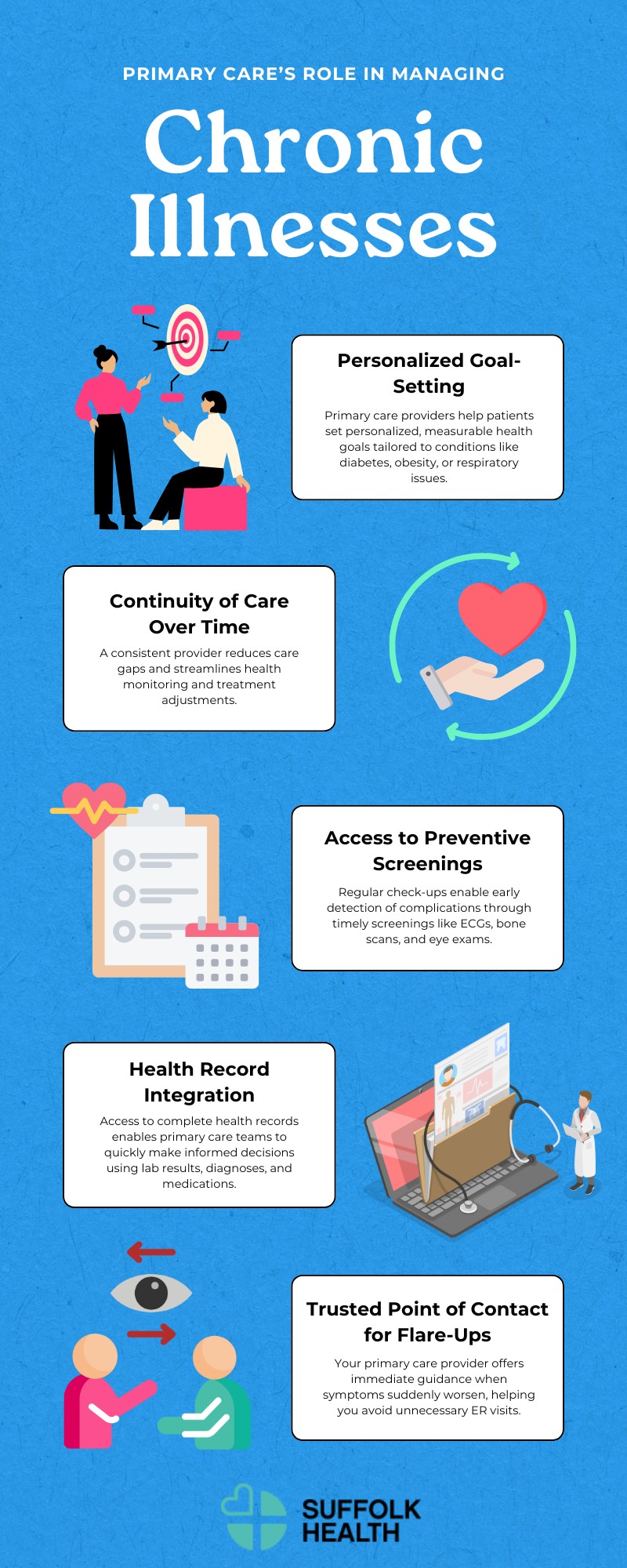
Primary care plays a vital role in managing chronic diseases by providing continuous, comprehensive, and coordinated care. One of its key benefits is early detection and consistent monitoring, which helps prevent complications and reduce hospitalizations.
Why ABA Therapy Matters Too
While primary care addresses the medical and physical aspects of chronic conditions, some families may also face behavioral health challenges—especially those raising children with autism or other developmental conditions. In such cases, ABA therapy offers evidence-based support to help children build life skills and improve daily functioning.
If you’re navigating the complexities of a developmental diagnosis alongside chronic disease, consider how both medical and behavioral therapies can work together to support the whole family.
Partner with a Primary Care Provider Who Prioritizes Your Long-Term Health
If you or someone you care for is living with a chronic condition, now is the time to build a reliable and ongoing relationship with a trusted provider. Suffolk Health offers primary care services in Long Island, New York, focused on preventive care, chronic disease management, and personalized health plans.
With regular visits, expert coordination, and a compassionate approach, Suffolk Health helps patients manage their conditions with confidence and clarity. Whether you’re newly diagnosed or navigating a long-term illness, your care starts here.
Don’t wait to take control—reach out today and schedule your first visit with Suffolk Health.

Suffolk Health offers comprehensive medical care in Long Island, New York, including routine check-ups, chronic disease management, and preventive services. Our experienced providers deliver quality healthcare tailored to your needs.
